‘Left in lockdown’- People with disability call for a COVID Recovery Plan

Media Release

Organisations representing hundreds of thousands of people with disability across Australia are calling on political parties to commit to establishing a COVID Recovery Plan for people with disability.

The groups want the incoming Australian Government to urgently implement a plan to address the fact that people with disability are being left in lockdown – while the COVID-19 virus is left to surge in the community.

People with disability have experienced fear, illness, isolation, neglect, and death over the two years, with our needs often forgotten during COVID-19.

COVID-19 isn’t over, and for many people with disability, the current lifting of public health measures without a plan to protect them, is causing significant distress.

People with disability need significant support to stay safe with so much COVID-19 in the community.

COVID-19 has had a greater impact on our community than others, and most particularly on First People with disability, migrants and refugees with disability, and people with disability in congregate settings.

COVID-19 has worsened many of the inequalities our community faces but has also shown that more accessible services are possible.

Two years after the pandemic began, now is the time to support people with disability, our families and caregivers, and organisations, as we rebuild our lives and look to the future.

There are also people developing post-viral disability, known as long COVID-19, who need support.

We are calling for the development of, and investment in, a COVID-19 Recovery Plan for people with disability that:

  • addresses the harm caused to our community,
  • puts in place a blueprint for the future, and
  • addresses the needs of with long COVID-19.

Some key elements of a COVID-19 Recovery Plan are:

  • Increased health services to address harm caused, both physical and mental.
  • Commitment to accessible and available information from the Federal Government.
  • Extend the Disability Royal Commission, because of COVID-19 impact, and accept recommendations made.
  • Ensure remote school and work can continue for those who need it.

The full COVID-19 Recovery Plan is available for download.

The Plan is endorsed by the eight national disability peak organisations.

  • Australian Federation of Disability Organisations
  • Children and Young People with Disability Australia
  • First Peoples Disability Network Australia
  • Inclusion Australia
  • Disability Advocacy Network Australia
  • National Ethnic Disability Alliance
  • People with Disability Australia
  • Women with Disabilities Australia

Quotes attributable to Dominic Golding, Policy Officer, National Ethnic Disability Alliance

“The pandemic isn’t over for our community, and we need a Recovery Plan to make sure people with disability are not left behind. Migrant and refugee people with disability need specific information, services and support to keep our community safe from COVID-19.”

Quotes attributable to Catherine McAlpine, CEO, Inclusion Australia.

“People with an intellectual disability are at high risk from COVID-19, and many have missed out on essential supports during the pandemic. We want all disability support providers to ensure that people with disability can access support during an emergency. People with an intellectual disability must also have equal access to healthcare if they get COVID-19, as well as vaccines.”

Case studies for media are available.

Media contact: Amelia Brock, 0430 187 161, [email protected]
Disability sector peaks logos

Disability a key issue in upcoming Federal Election

Commitments on disability issues from both major parties demonstrates that the rights of people with disability are a growing concern for Australian voters. This is a powerful testament to the work and strong voices of people with disability, their families and disability advocates who campaigned for the NDIS and continue to fight for more inclusive Australia.

As the national peak body for people with an intellectual disability and their families we strongly welcome today’s commitment by Greg Hunt, the Minister for Health, of $8 million in funding for the establishment of a National Centre of Excellence in Intellectual Disability Health. This significant and critical announcement is an important step in addressing health inequality for people with an intellectual disability. It follows sustained campaigning by the disability community, and in particular work by the Council for Intellectual Disability (CID). The Centre is a critical component of the National Roadmap for Improving the Health of People with Intellectual Disability. The announcement also includes a further $20 million commitment by the Australian Government for much needed intellectual disability health research.

Jim Simpson, CID Senior Advocate said “the funding announced by the Minister will allow the establishment of a Centre with solid foundations and for important research into practical strategies for improving health care for a very disadvantaged population. While the initial funding of the Centre is only for 2 years, we will be working with government to make it ongoing.”

The announcement followed the launch yesterday in Melbourne of the Australian Labor Party (ALP) election platform for people with disabilities by Shadow Minister for the National Disability Insurance Scheme (NDIS), Bill Shorten. This includes a series of measures around the operation of the NDIS, as well as support for the National Disability Strategy and a National Autism Strategy.

Inclusion Australia welcomes the ALPs focus on the NDIS. We agree on the need for more consistency in planning. People with an intellectual disability and their families want the NDIS to be secure, steady and responsive.

We are pleased to see a pledge to strengthen co-design in the NDIS. All scheme changes need to be co-designed with people with disability – including increasing opportunities for leadership and involvement of people with an intellectual disability.

We also cautiously welcome the ALPs proposal for increasing funding for disability advocacy. Our community has long argued for individual and systemic advocacy funding to help people navigate complicated processes, and to make systems easier to use and work more efficiently. We look forward to more detail on the nature of the proposed increase.

Inclusion Australia also supports the ALP election focus on employment with ‘an evidence-based Centre of Excellence to get more people with disability into long-term jobs’. However, such a Centre must also ensure that people are paid proper award wages for their work, including people with an intellectual disability. Further, work must be done in parallel to break up the ‘polished pathway’ from schools into segregated workplaces.

Catherine McAlpine, CEO, Inclusion Australia said: ‘Whoever forms government after the election, we want to make sure people with an intellectual disability are more included in the community. In particular, changes to the NDIS must stop the polished pathway to segregation that many people experience.‘

“I miss my friends but I would never go back” – one woman’s experience of working in ADEs

Ahead of the Disability Royal Commission hearing on Australian Disability Enterprises, Georgie – a woman with disability in her 60s from Perth, Western Australia talked with Jamie Bannister about her long career.

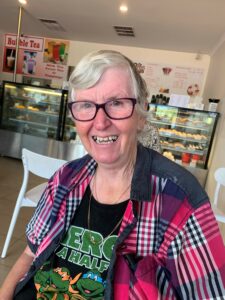
A woman in a cafe smiling

Meet Georgie

Georgie is originally from Melbourne. She moved to Perth when she was 10.

Now in her 60s, Georgie works part time at Shelter WA, and does part time work for Developmental Disability WA (DDWA) as part of the Towards Inclusive Practice project.

In her spare time Georgie likes to catch up with friends for coffee, play on her iPad and barrack for the West Coast Eagles in AFL.

Georgie’s career

Georgie has had a long career, full of different roles. Her first job was in the 1970s, working for the Good Sammy charity in WA. “People were kind and friendly there.”

She then moved to working in a Good Sammy shop. The days were long, from 9-5 and 9-6 on weekends. “There was lots of standing up which I didn’t like as it made me very tired.”

One day in the 1980s Georgie saw a sign for Activ, a disability service provider in Perth. She put her name down and was invited to come in for an interview. She was quickly offered a place at Activ.

Her work included putting labels on beer bottles, and lollies in show bags. She worked five days a week, from 8.30am to 3.30pm.

Unfortunately, she does not have good memories of her time there. “I didn’t like it. Some of the staff you get on with, but others treated us badly. They would tell us to ‘sit down and do your job.’”

Georgie felt that the paid staff and the staff with disabilities were not treated the same. “They would have morning teas with nice food, but we couldn’t have any. We were not allowed or had to bring in our own.”

One time Georgie met up with her work friends for lunch on her day off. “I went to the bar and ordered a beer and the staff yelled ‘what are you doing Georgie?’ I said, ‘I’m having a beer, I’m allowed.’”

Georgie remembers the staff telling the ADE workers that they were not allowed to have the broken lollies they put in the showbags. “Then we would see them put them away in a drawer and eating them later.”

After getting her 5-year badge, Georgie decided to leave after 8 years. “They moved the place to another site. It was too far away. You had to pay for your own bus fare to get there so it wasn’t worth it.”

Later on Georgie worked for the City of Fremantle and Fremantle Hospital. “I promised myself I would never, ever go back to a sheltered workshop. I miss my friends, but I would never go back if you gave me $1000.”

Eventually Georgie found out about DDWA. She loves working there. “The people are like family here,” she says.

What needs to change about ADEs?

“Staff need training themselves on respect. The way staff treated people was not OK. We have the same rights they have”

What would you say to people who enjoy working at an ADE?

Georgie says that she has some friends who still work at Activ. One friend has been there for 38 years. “Some of the guys worry they won’t see their friends anymore [if they leave].”

“Some people like it, they think it’s great. But I get paid properly for my work [in the Towards Inclusive Practice project]. It helps me to budget and save for things.”

“Jobs are harder to get now because of COVID,” says Georgie. “There should be more help for people who want to get into open employment. Open employment is best. You get more money and real pay.”

What would you say to the Disability Royal Commission about ADEs?

“If I had a choice, I’d close them down. It’s unfair on the guys. I’d say you need to get every person out. Get them out of the workshops.”

Georgie can also see similarities with previous campaigns about segregation of people with disabilities. “It’s like the old institutions. People don’t have choices about where to live and work. I see some services where they spent lots and lots of money to make them all new again. Nah, close them down.”

Equal Pay, Equal Respect: time to end discriminatory wages for people with an intellectual disability

The experiences of people with disability working in Australian Disability Enterprises (ADEs), also known as sheltered workshops, will be the focus of the Disability Royal Commission this week.

As the peak representative body for people with an intellectual disability and their families, we welcome this public hearing as an opportunity to talk about the impact of extremely low wages on people with an intellectual disability who work in ADEs, and ways to increase opportunities to work in open and self-employment.

People with disability who work in ADEs, who are mostly people with an intellectual disability, earn as little as $2.50 per hour. This is unfair and needs to change now.

The work people with an intellectual disability do is useful and valuable. People care about their jobs and do them with pride; in their workplace, in working hours, with their workmates. People are often working for large businesses that carry out profitable contracts which benefit local communities and consumers.

However, in most cases, ADE workers with disabilities are the only employees not receiving at least minimum wage. A person with disability working full time will earn $9,000 less than a person on minimum wage. No Australian should earn this little for their work.

The Australian Government can fix this injustice today. We want the Australian Government to act now to ensure that all people with disability who work in ADEs are paid at least the minimum wage.

Fair pay should also be the first step away from the segregated model that underpins most ADEs.

Inclusion Australia is calling for a fully resourced five-year transition plan for workers in ADEs to move to open and self-employment.

The plan, co-designed with people with an intellectual disability and their families, will mean people with an intellectual disability can have more choices and options about the kinds of work they could do, with the right support.  It should include services, specialist DES providers, the NDIA and the government.

No one currently working at an ADE should lose their jobs during this transition. Each ADE will transition differently, and a tailored transition plan will be needed for each service.

There is knowledge and expertise about supporting people with an intellectual disability at work in the existing ADE system that is important to keep. We believe that many ADEs could transition into open employers of people with an intellectual disability. Some may be able to act as a community hub to support broader inclusive employment across their communities.

There is also work that needs to be done during this transition to make sure there are more jobs in open and self-employment for people with an intellectual disability, as well as the right kinds of support. The polished pathway into ADEs from school must be addressed, with clearer, easier pathways and more options for people to explore open and self-employment.

The National Disability Insurance Scheme and the Disability Employment Services providers all have a role to play in making sure more people with an intellectual disability can work in open and self-employment. 

Inclusion Australia’s Our Voice Committee, who are all people with an intellectual disability from across Australia are clear “People with disabilities have the right to work in the open market like anyone else and get the training and support they need; this means no more sheltered workshops.”

We call on the government to start this transition process now by addressing the wage gap of ADE workers and ending discriminatory wages for people with an intellectual disability.

#EqualPayEqualRespect

Inclusion Australia Disability Royal Commission ADE media statement in full – 11 April 2022

Inclusion Australia DRC ADE media statement – 11 April 2022 – Easy Read

Changes to NDIS Supported Independent Living must not leave people with disability worse off

Inclusion Australia is concerned about announcements this week about changes to home and living supports, and in particular changes to Supported Independent Living (or SIL) for people with disability who use the National Disability Insurance Scheme (NDIS).

As the national peak body for people with an intellectual disability and their families, we welcome discussion and actions to improve NDIS systems and processes and make it easier for people with disabilities to access the supports they need to live their lives.

However, any changes must reflect the very real challenges experienced by people with disability and be developed in partnership with the disability community to avoid leaving people without essential supports.

SIL is a primary support for people with an intellectual disability. This includes many people who have been institutionalised all their life and those who have complex support needs. These are the very people the NDIS was designed to support.

We and other disability representative organisations are regularly hearing anecdotal reports around cuts to SIL in people’s NDIS packages. We are naturally cautious that the changes to SIL are being rushed through in a climate of ongoing concerns expressed by the Government and the National Disability Insurance Agency about scheme sustainability and reducing costs.

This should not be the driver for change, nor should announcements that fit in with the election cycle. 

We are also concerned about the move to ‘step down’ or reduce the supports for people with disability where they live.

Inclusion Australia CEO Catherine McAlpine said “Whilst we believe there is a sincerity to make the scheme work better, we fear that these changes are being rushed through. We do not wish to see changes that will mean people are left with insufficient supports. This will lead services to cut corners and will result in a decrease in the freedoms and rights of people with disability.”

“We also want to see more consideration of other safeguards people need, including funded independent support for decision-making that ensure people are not being forced into making ‘choices’ against their best interests.”

It is also critical that other parts of the system work to support the aims of the NDIS. People with disability are part of the broader Australian community.  Inclusion Australia calls for all states and territories to increase the range of accessible, social and public housing options. Without this, people ‘stepping down’ from SIL to an Independent Living Options (ILO) package will end up languishing in dangerous and insecure accommodation such as boarding houses.

Scheme sustainability is vital to the success of the NDIS. However, changes must be co-designed and implemented in partnership with scheme participants and disabled peoples organisations. To do otherwise only creates new problems and puts the lives of people with disability at risk.

Ends

Talking inclusion on World Down Syndrome Day

World Down Syndrome Day 2022 is on Monday, 21 March. The theme for this year’s event is ‘What does inclusion mean?’

Our colleagues Brooke Canham and Tara Elliffe took time out from their work to share their thoughts on what inclusion means to them with our Inclusion Manager, Becky Rowe.

Thanks for talking with me today. What does inclusion mean to you?

Brooke:             Inclusion means that everyone is working together as a team.

Tara:                  Inclusion means being part of a community [with] lots of different options for us.

What does inclusion look like at work?

Brooke:             In the workplace I feel having my opinion and having my voice heard is being included. I get to say what I want to say, and I’m not pushed to the side…

Tara:                  [It’s about] new challenges and adventures, to understand what we have to say – work in a team and celebrate Down syndrome with me!

How do the people you work with make you feel included?

Brooke:             [They] let me say what I like to do during the workday. [They also] make a work plan to help me focus and be included in the team and understand all the things. Also, my coworker talks to me and tells me things. I feel included because she is comfortable around me to include me.

Tara:                  [My co-worker] understands me… he knows me. He’s got a good sense of humour, he’s funny. He teaches me all sorts of different kinds of things like leadership. [My boss] also includes me. She has a son with Down syndrome. Parents who have good relationship with their daughter or son with Down syndrome [helps them to support me].

A young woman with glasses and a pink shirt smiling
Brooke Canham, Peer Worker for the Make Decisions Real project

What can other workplaces do to make people with Down syndrome feel included?

Tara:                    They should be doing a lot of training of how to support us. There should be training on disabilities. [Especially] training with people with Down syndrome as presenters. We all have a voice to use – just listen to me!

Brooke:               Don’t discriminate. Give them a try. If we need help, let us ask questions. Never judge a book by its cover. A lot of people are very rude to people with Down Syndrome.

Tara:                    Workplaces that don’t include you make me so stressed. I got a migraine and my body shut down. I was very stressed and had to leave that job.

Brooke:              To be included is to be invited to staff functions, don’t be rude about it! My other work has included me in their team [Brooke also works in a coffee shop]. They are very inclusive there, we always talk together, we always communicate on a higher level. I’m happy my boss reached out and wanted to work with people with Down syndrome. He says it makes him happy.

What does inclusion look like in the community?

Brooke:              [It’s about] going out to places and being included in the things you love to do.

Tara:                   I socialize, coffee, food, shopping, hanging out with my family, music, football, games, walking, sky diving! My friend did it so why can’t I do it?

Brooke:              Sometimes it could be a bit better. Some people stare at you, and I don’t feel like that’s very inclusive. If something goes wrong… if you’re upset then people in the community don’t come and make sure you’re OK. I think that’s more due to COVID. Like people trying to keep their distance.”

Tara:                   I have 3 brothers. It’s difficult the impact of Down syndrome in my family. It’s a challenge. [But they make me feel] good because their friends are my friends too. I’m an aunty of 2 girls who are 6 and 2. I like to teach the girls to learn about people with Down syndrome like me. Their cousin has Down syndrome too. I’m not the only person in the family with Down syndrome. There’s 3 of us.

Brooke:              [Being included] is a positive feeling. It makes you feel you know someone in the community is there. You know you’re being treated the same way as other people.

A young woman in a patterned t-shirt smiling with her arms in the air
Tara Elliffe, Easy Read advisor

How does your community include you?

Brooke:              A lot of family include me… They always ring me making sure I’m OK. They include me in family events. Mum always asks me to come round for dinner and includes me in fitness – like going to spin class together. Dad calls me and picks me up from places… asks me what I want and cooks dinner. [My sister] includes me in a lot. She does so much for me. She includes me with going out with her friends sometimes. She includes me in so much. My neighbours include me as well. [We] talk when things go wrong – like if someone breaks into your house – and they help you out. [We need] more people looking in and being aware that someone who has Down syndrome may need help.

What can the community do better to include people with Down syndrome?

Brooke:              Not just looking at people and putting a label on them. [Having Down syndrome] can be challenging… people label that as ‘you can’t do this’ and ‘you can’t do that’. That ticks me off! That really gets to me.

Tara:                    Groups, like community groups, for everyone. I’m starting a group of my own soon. It’s for people about my age – adults. We’ll hang out, get coffee, lunch, movies, social outings…

Brooke:              At the shops… People speak to us as babies and it’s very patronising. Everywhere, the hospitals, the gym, just everywhere… needs to be more positive. It’s okay to have a disability! It’s okay and people don’t understand it’s okay.

Tara:                    Don’t be afraid of showing people what is you. I am proud to have Down syndrome. I have friends with Down’s and friends without Down’s. I have both. They treat me as a normal person. I am a woman, hear me roar!

To find out more about World Down Syndrome Day 2022 visit www.worlddownsyndromeday.org

You can also say what inclusion means to you on social media using the hashtags #InclusionMeans and #WorldDownSyndromeDay

No excuse for shocking abuse of Ann-Marie Smith

Inclusion Australia is appalled by comments made by the legal team representing the disability support worker who pleaded guilty to the manslaughter of Adelaide woman, Ann-Marie Smith. Ms Smith died as a result of shocking neglect in 2020.  

Speaking as part of the sentencing hearing for former support worker Rosa Maria Maione, lawyer Stephen Ey made a series of highly offensive statements suggesting that Ms Smith was in some way responsible for the horrific abuse that led to her death. 

As a community we must be very clear: nothing can excuse the neglect and abuse of Ann-Marie Smith by the worker who was being paid to support her. This is pure victim blaming.  

“We cannot stand by and listen to these kinds of comments about people with disability,” said Inclusion Australia CEO, Catherine McAlpine.  

“It is outrageous that the language of choice and control is being used to justify the appalling neglect and abuse of Ms Smith. When a person with disability is in pain, or is unwell, disability support workers must still make sure they have the vital personal care they need.”  

All people with disability have the right to be safe and to get the supports they need, from workers who provide professional, dignified care. 

As the late disability advocate Dave Hingsburger famously observed, disability support workers are ‘not friends, not family.’  

Many people with disability have good, highly positive relationships with their essential support workers. However, all support workers are still being paid to do an important job. This includes a responsibility to be professional, and to understand and respect personal boundaries.

There can be no excuse for poor care – or much worse as was the tragic case for Ann-Marie Smith – and the disability community will not stay silent when suggested otherwise.  

End Deadly Disability Discrimination now! Inclusion Australia and partners call for implementation of the National Roadmap for Improving the Health of People with Intellectual Disability.

In the uncertainty of an election year, Inclusion Australia and partners are calling on all political parties to guarantee commitment to the National Roadmap for Improving the Health of People with Intellectual Disability.

Evidence heard at the Disability Royal Commission showed that people with intellectual disability die up to 27 years earlier than people without disability. Many of these deaths are from potentially avoidable causes.

As the national representative body for people with an intellectual disability and their families we applaud the Australian Government’s support for the development of the Roadmap and commitment in August 2021 to funding its rollout. This includes a commitment to establish a National Centre of Excellence on the Health of People with Intellectual Disability, which is already underway in consultation with our community.

The Roadmap was developed by the Department of Health through a highly collaborative process. This included a series of roundtables with people with an intellectual disability, families, and representatives, as well as academic and health experts. As a result, it is very much in line with what was advocated for in the Our Health Counts campaign by the Council for Intellectual Disability (CID) and Inclusion Australia in collaboration with Down Syndrome Australia, the Australian Association for Developmental Disability Medicine and the Department of Developmental Disability Neuropsychiatry at UNSW.

The Roadmap also has the support of a range of leading people with intellectual disability and family members, disability advocacy, health and service provider organisations, the Consumers Health Forum of Australia, representatives of key professional colleges and associations, leaders in health education, Primary Health Networks and relevant Commonwealth and State and Territory health and disability agencies.

Today we stand with them, and over 100 prominent voices from across the disability community to call for support from all political parties and independents to implement the Roadmap and “urgently address the stark and sometimes deadly health inequalities faced by people with intellectual disabilities”.

“This call comes at a critical time for people with an intellectual disability,” said Catherine McAlpine, CEO of Inclusion Australia. “The current COVID-19 pandemic has brutally exposed the reality of health inequality in for people with an intellectual disability. Reports from the United Kingdom have highlighted the death rate from COVID for people with learning [intellectual] disabilities aged 18-30 as up to 30 times higher than for those without an intellectual disability.”

“We and our members have been active and provided clear advice to the Australian Government on the need for targeted interventions to support our community. As we enter a third year of life with COVID-19, a national commitment to better meeting the health needs of people with an intellectual disability is still urgently required.”

For more on how you can get involved in the campaign, please visit cid.org.au/our-campaigns/end-deadly-disability-discrimination-2/

Disability Royal Commission examines Disability Employment Services (DES)

The experiences of people with disability within the Disability Employment Services (DES) system will be the focus of the Disability Royal Commission hearing on 23-25 February 2022.

Read our statement on what this means for people with an intellectual disability and what needs to change.

Inclusion Australia Media Release – DRC and DES – February 2022 


Find more about our advocacy on employment here.

You can also find useful information on our Everyone Can Work website

SACID Leading Through Inclusion Conference

SACID Conference 2022

SACID is running a conference!

The conference is called Leading Through Inclusion.

It is for:

  • People with intellectual disability
  • Families and caregivers
  • Anyone who wants to create an inclusive community.

Put this date in your diary now.

9 – 10 June 2022.

More information coming soon.

Contact SACID on (09) 9352 4415 or email [email protected]